A Street Shaped by History
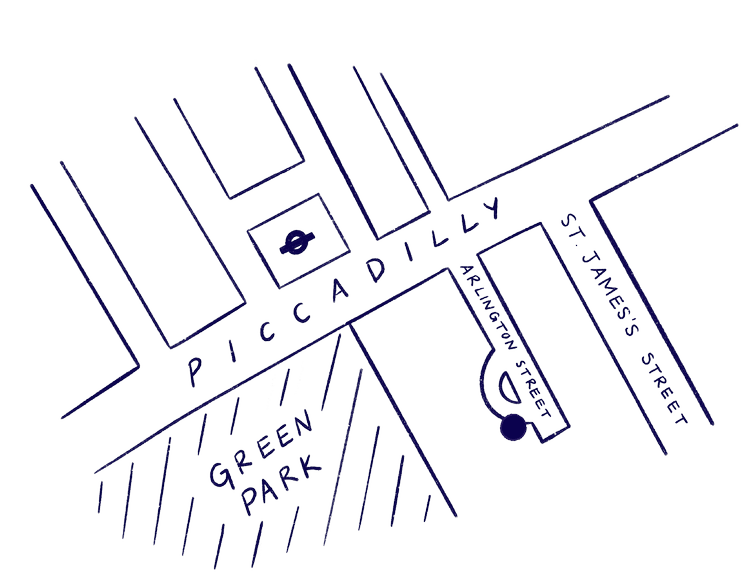
Arlington Street is less than 200 meters long, but filled with stories. Originally part of St James’s Field, a royal hunting ground, the area was granted to Henry Bennet, Earl of Arlington, by Charles II in 1681.
It became a stylish residential street, and in the 18th century, was home to several prominent politicians and aristocrats including the Duke of Richmond, Lord Guildford, Lord Kingston, and Lord Cholmondeley.
Famous Residents
In 1715, William Pulteney, Earl of Bath, moved into a house on the Green Park side. The following year, Sir Robert Walpole, our first Prime Minister, moved in next door at No. 5.
Horace Walpole, a celebrated writer, was born there in 1717 and lived there for many years. (Today, it’s a residential building known as Walpole Mayfair.)
Architectural Landmarks
Wimbourne House — also known as the William Kent House — is located at No. 22. An 18th century Palladian masterpiece, it was used as the headquarters of Eagle Star Insurance until 2005, when it was sold to the Ritz Hotel.
Arlington House
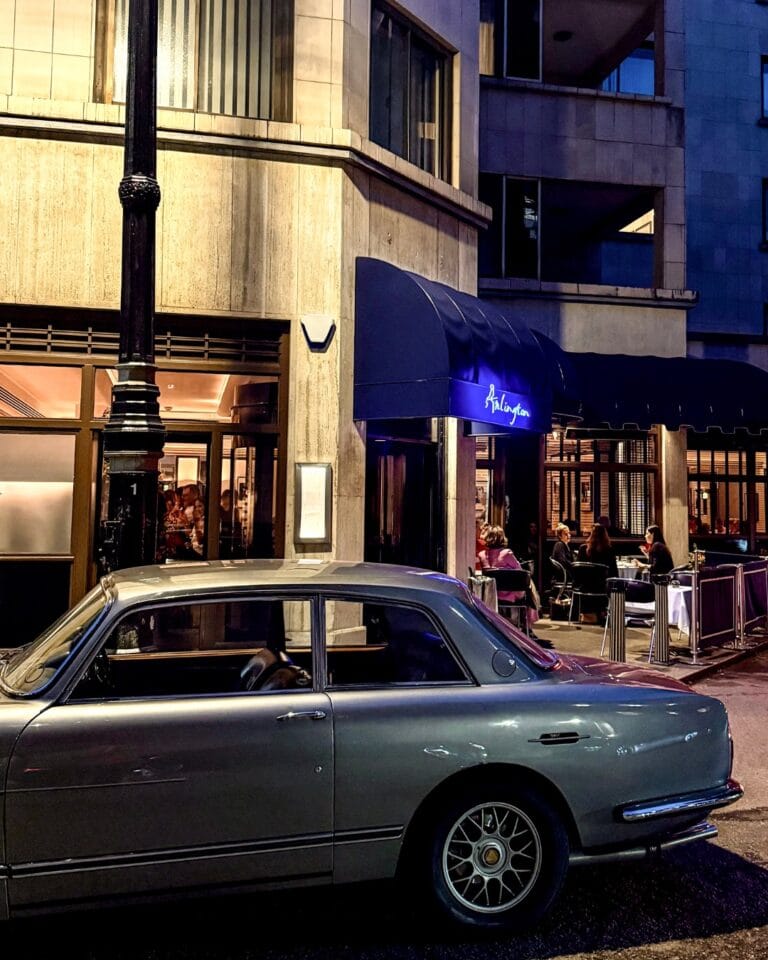
Arlington House, where we occupy part of the ground floor, was originally a 19th-century gentleman’ s club and hotel.
The playwright Noël Coward was among the luminaries who lived there for a spell; Oswald Mosley, the founder of British fascism, is its most notorious.
Today, Arlington House has also been converted to luxury flats — and we are always delighted to see its residents, along with all of our local regulars, walk through out revolving door.
Join Us on Arlington Street
Step through our revolving door and become part of the continuing story of Arlington Street.